Introduction
Lyme disease is a bacterial infection that spreads to humans through the bite of an infected tick. It can affect the skin, joints, nervous system, and, in some cases, the heart. Recognizing the early signs is important because prompt diagnosis and appropriate antibiotic treatment can prevent serious complications.
One of the best-known signs is an expanding skin rash called erythema migrans. However, not everyone develops this rash, and some people may not notice a tick bite at all. Other symptoms can include fever, headache, fatigue, muscle aches, and joint pain.
Lyme disease is most common in certain regions of North America and Europe. The likelihood of infection depends on local tick populations, the presence of disease-causing bacteria, and exposure to areas where infected ticks live.
CDC
+1
This guide explains what Lyme disease is, how it spreads, its symptoms and risk factors, the tests used to diagnose it, available treatments, and practical ways to reduce the risk of infection.
What Is Lyme Disease?
Lyme disease is an infectious illness caused by bacteria belonging to the Borrelia group. In the United States, the primary cause is Borrelia burgdorferi, although other related species can cause Lyme disease in different regions.
The infection is transmitted through the bite of an infected blacklegged tick, sometimes called a deer tick. These tiny parasites feed on blood and can be difficult to notice, particularly during their immature stages.
After entering the body, the bacteria can cause an expanding rash and flu-like symptoms. If the infection is not treated, it may spread and produce additional problems involving the joints, nerves, or heart.
The severity varies from person to person. Many people recover completely with appropriate treatment, particularly when the infection is identified early.
CDC
+1
What Causes Lyme Disease?
Lyme disease develops when an infected tick transmits Borrelia bacteria into the skin while feeding.
Ticks are commonly found in wooded areas, tall grass, leaf litter, and places where wildlife lives. They can attach to exposed skin or clothing and crawl to less visible areas, including the scalp, armpits, waistline, and behind the knees.
Several factors influence the chance of infection:
- Exposure to areas where infected ticks are present.
- Spending time in wooded, grassy, or brush-covered environments.
- Having an attached tick remain on the skin for an extended period.
- Living in or traveling to a region where Lyme disease occurs.
- Failing to check the skin and clothing after outdoor activities.
Lyme disease is not generally spread through ordinary person-to-person contact, hugging, sharing food, or being near someone who is infected. It is also not considered a disease transmitted directly from pets to people, although pets can carry ticks into the home.
CDC
+1
Symptoms of Lyme Disease
Symptoms can appear at different times depending on the stage of infection. Some develop within days, while others may take weeks or months to become noticeable.
1. Early Symptoms
Early symptoms commonly begin within 3 to 30 days after an infected tick bite.
Possible signs include:
- Fever and chills.
- Headache.
- Fatigue or unusual tiredness.
- Muscle aches.
- Joint pain.
- Swollen lymph nodes.
- An expanding skin rash.
These symptoms can resemble influenza or other infections, so a history of outdoor exposure can be an important diagnostic clue.
2. Erythema Migrans Rash
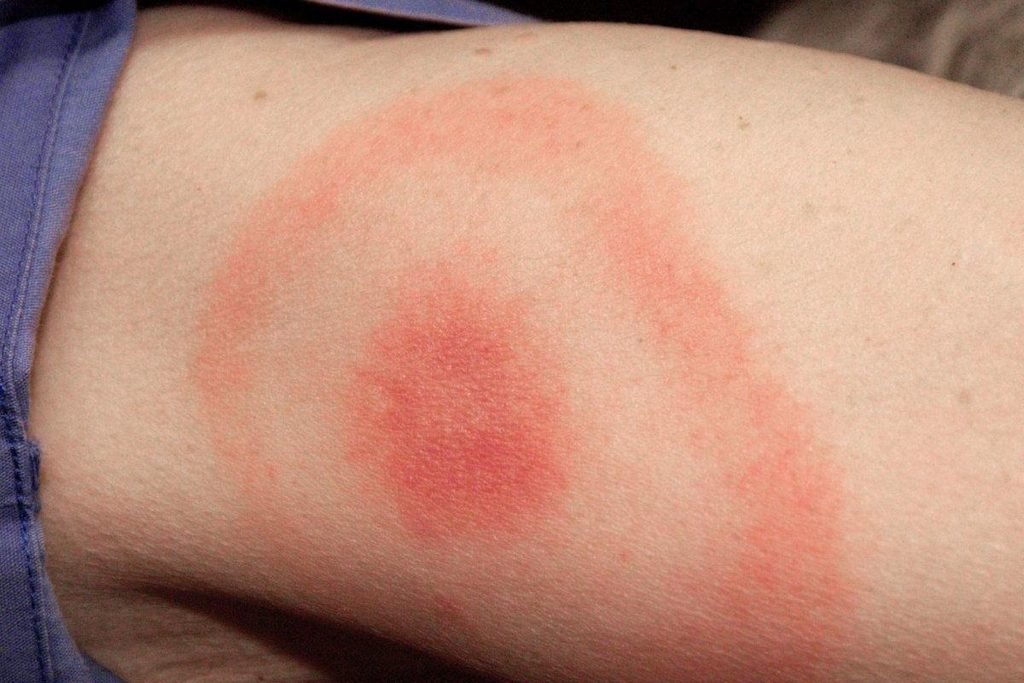
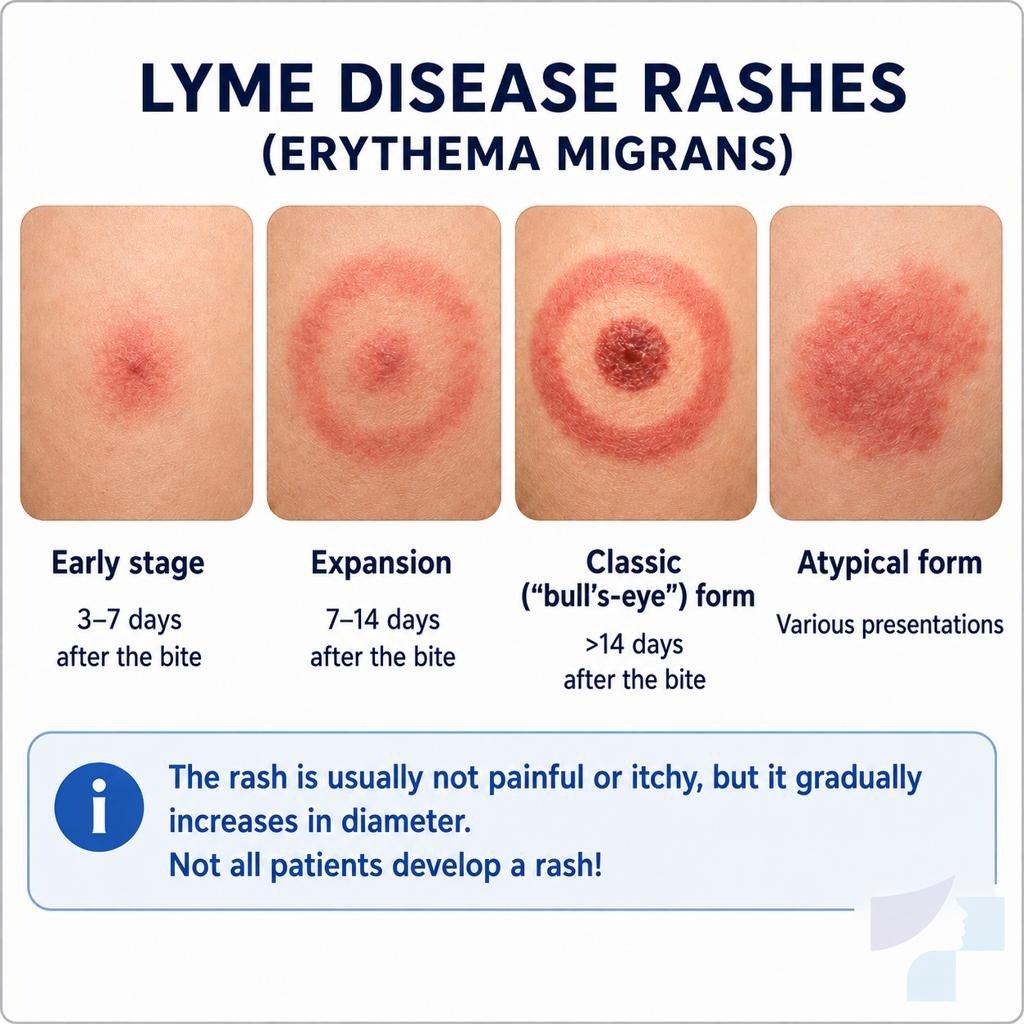
Erythema migrans is a characteristic rash associated with Lyme disease. It often begins at the site of the tick bite and gradually expands over several days.
The rash may be circular or oval and can have a darker or lighter center. Although it is often described as a bull’s-eye rash, it does not always look like a target. It may appear uniformly red, pink, or purplish, depending on skin tone.
Important features include:
- Gradual expansion in size.
- Appearance several days after the bite.
- A rash that may feel warm but is often not painful or itchy.
- Development on areas of the body that may be difficult to inspect.
An expanding rash following possible exposure to infected ticks warrants prompt medical evaluation. A typical erythema migrans rash may be sufficient for a clinician to diagnose Lyme disease without waiting for a blood test.
NHS
+1
3. Neurological Symptoms
If the infection spreads to the nervous system, it may cause neurological problems. These can include:
- Facial weakness or drooping, sometimes affecting one side of the face.
- Numbness or tingling.
- Shooting nerve pain.
- Severe headaches and neck stiffness.
- Other symptoms associated with inflammation around the brain or spinal cord.
New facial weakness, severe headache with a stiff neck, or other significant neurological symptoms require prompt medical assessment.
4. Joint Pain and Swelling
Lyme disease can cause arthritis, particularly in large joints such as the knees. Symptoms may include visible swelling, stiffness, and pain that can recur or affect different joints.
Joint symptoms may develop weeks or months after the initial infection, especially when early disease has not been treated.
5. Heart-Related Symptoms
In some cases, Lyme disease affects the electrical signaling system of the heart. This complication is known as Lyme carditis.
Symptoms can include:
- Palpitations or an unusually rapid heartbeat.
- Dizziness or lightheadedness.
- Shortness of breath.
- Chest discomfort.
- Fainting.
Chest pain, fainting, or difficulty breathing should be treated as urgent symptoms. Lyme carditis can occasionally become serious and require hospital treatment.
CDC
+1
Stages of Lyme Disease
Lyme disease is often described in three stages. However, symptoms do not always follow a predictable pattern, and not every patient experiences all three stages.
Stage 1: Early Localized Infection
The infection initially affects the area around the tick bite. An expanding rash, fatigue, fever, headache, and muscle aches may develop.

Stage 2: Early Disseminated Infection
The bacteria spread beyond the original bite site. Multiple rashes, facial weakness, nerve pain, or heart rhythm abnormalities may occur.

Stage 3: Late Lyme Disease
Untreated infection may lead to arthritis, especially in large joints, and occasionally other persistent complications. Not everyone progresses to this stage.
Recognizing the infection early is important because appropriate treatment can reduce the risk of complications.
CDC
+1
How Is Lyme Disease Diagnosed?
There is no single symptom that confirms every case of Lyme disease. Doctors consider the patient’s symptoms, possible tick exposure, physical examination, and laboratory results.
Medical History and Physical Examination
A healthcare professional may ask about recent travel, outdoor activities, possible tick bites, skin changes, fever, joint swelling, and neurological symptoms.
A typical expanding rash combined with a plausible exposure history may be enough to make a clinical diagnosis in an area where Lyme disease is common.
Blood Tests
Blood tests usually detect antibodies that the immune system produces in response to Borrelia bacteria. In the United States, the CDC recommends an approved two-step antibody testing process.
The first test is followed by a second test when the initial result is positive or indeterminate, according to the testing algorithm.
An important limitation is that antibodies take time to develop. A person tested during the first few weeks of infection may have a negative result despite having Lyme disease.
Antibodies can also remain detectable for months or years after successful treatment, so a positive result does not necessarily mean an infection is still active.
CDC
+1
Additional Tests
When complications are suspected, doctors may recommend additional investigations, such as:
- An electrocardiogram (ECG) for possible heart involvement.
- Joint fluid analysis when another cause of arthritis must be excluded.
- Selected neurological investigations for suspected nervous system involvement.
The tests used depend on the patient’s symptoms and clinical findings.
Treatment for Lyme Disease
Lyme disease is treated with antibiotics. The specific medicine and treatment duration depend on the patient’s age, pregnancy status, allergies, disease stage, and affected organs.
1. Oral Antibiotics
Commonly prescribed antibiotics include:
- Doxycycline.
- Amoxicillin.
- Cefuroxime axetil.
These medicines are used for many cases of early Lyme disease and certain other presentations. The appropriate antibiotic and course length should be determined by a healthcare professional.
CDC
+1
2. Intravenous Antibiotics
Some patients with serious complications, including selected neurological or cardiac presentations, may require antibiotics delivered directly into a vein.
Hospital care may also be necessary when heart rhythm abnormalities or other severe complications occur.
3. Treatment for Lyme Arthritis
Lyme arthritis is generally treated with an appropriate course of antibiotics. If joint swelling persists after initial treatment, the clinician may reassess the diagnosis and consider further treatment or referral to a specialist.
Persistent symptoms do not automatically mean that live bacteria remain in the body.
4. Recovery After Treatment
Most people treated appropriately recover completely. However, some experience fatigue, body aches, or difficulty concentrating for an extended period after treatment.
This is sometimes called post-treatment Lyme disease syndrome. Its causes are not fully understood, and prolonged antibiotic treatment has not been shown to reliably resolve these symptoms and can cause harm.
People with persistent symptoms should work with a healthcare professional to evaluate other possible causes and develop an appropriate management plan.
CDC
+1
Important: Do not take leftover antibiotics or purchase unverified treatments online. The correct treatment depends on an accurate clinical assessment.
How to Remove a Tick Safely
If you find an attached tick, removing it promptly can reduce the risk of certain tick-borne infections.
Follow these steps:
- Use clean, fine-tipped tweezers.
- Grasp the tick as close to the skin as possible.
- Pull upward steadily without twisting or crushing the tick.
- Clean the bite area and your hands with soap and water or an appropriate antiseptic.
- Monitor the area and your health for symptoms.
Avoid burning the tick or applying petroleum jelly, nail polish, or other substances in an attempt to make it detach.
If you develop an expanding rash, fever, or other concerning symptoms after a tick bite, contact a healthcare professional. Preventive antibiotics may be appropriate in specific circumstances, but they are not routinely required after every tick bite.
CDC
+1
How to Prevent Lyme Disease
Preventing tick bites is the most effective way to reduce the risk of Lyme disease.
- Wear protective clothing: Use long sleeves, long trousers, and closed shoes when visiting areas where ticks may be present.
- Use suitable insect repellent: Choose a registered repellent appropriate for your skin and intended use, following the product instructions.
- Stay on clear paths: Avoid brushing against tall grass, dense vegetation, and leaf litter where possible.
- Check your body: Inspect your skin, scalp, waistline, armpits, and the backs of your knees after outdoor activities.
- Check clothing and pets: Ticks can enter homes on clothing, equipment, or animals.
- Shower after outdoor activities: Showering soon after returning indoors may help remove unattached ticks and make it easier to check your skin.
- Remove attached ticks quickly: Prompt removal is important even when the tick is very small.
These precautions can also reduce exposure to other tick-borne illnesses.
CDC
+1
Can Lyme Disease Cause Long-Term Problems?
Some people develop complications when Lyme disease is not treated promptly. These may include recurrent joint swelling, nerve problems, or heart complications.
Others continue to experience fatigue, pain, or cognitive difficulties after completing appropriate treatment. These prolonged symptoms deserve medical attention, but they do not necessarily indicate persistent bacterial infection.
A clinician can assess the symptoms, consider alternative diagnoses, and recommend supportive treatment based on the patient’s needs.
It is also possible to develop Lyme disease again after a new bite from an infected tick. Previous infection does not provide complete protection against future infection.
Who Is at Higher Risk of Lyme Disease?
People who live in or travel to areas where infected ticks are established have a greater risk of exposure. Risk may be increased by:
- Hiking, camping, or working in wooded environments.
- Gardening or working near tall grass and brush.
- Spending time outdoors without tick protection.
- Living in a region with known Lyme disease transmission.
- Traveling to an affected area during periods of increased tick activity.
Lyme disease is not equally common worldwide. People in regions where it is uncommon should not assume that every tick bite represents Lyme disease; other tick-borne infections and local medical conditions may need consideration.
Conclusion
Lyme disease is a bacterial infection transmitted through the bite of an infected tick. It can cause an expanding skin rash, fever, headache, fatigue, joint pain, and, in more complicated cases, problems involving the nervous system or heart.
Early diagnosis and appropriate antibiotic treatment are important for preventing serious complications. Blood tests can help confirm the diagnosis, although results may be negative during the early stages of infection. A typical expanding rash and a relevant exposure history may allow a doctor to diagnose the disease without waiting for laboratory confirmation.
Preventing tick bites, checking the skin after outdoor activities, and removing attached ticks promptly are practical ways to reduce risk. Anyone who develops a spreading rash or concerning symptoms after possible exposure should seek medical advice.
Most people who receive appropriate treatment recover completely, while those with persistent symptoms may need further evaluation and individualized care.
Frequently Asked Questions (FAQs)
1. What is Lyme disease?
Lyme disease is a bacterial infection caused by Borrelia bacteria and transmitted through the bite of an infected tick. It can affect the skin, joints, nervous system, and heart.
2. What are the first symptoms of Lyme disease?
Early symptoms may include an expanding skin rash, fever, chills, headache, fatigue, muscle aches, and joint pain. Not everyone develops a rash or notices a tick bite.
3. Does Lyme disease always cause a bull’s-eye rash?
No. The characteristic rash may have a central clearing, but it can also appear as a uniformly expanding area of discoloration. Some infected people never develop a noticeable rash.
4. How soon do Lyme disease symptoms appear?
Early symptoms often develop within 3 to 30 days after an infected tick bite. Other symptoms, such as arthritis or certain neurological problems, may appear weeks or months later.
5. Can Lyme disease be cured?
Most cases can be successfully treated with appropriate antibiotics. Early treatment generally offers the best chance of a complete recovery, although some people experience prolonged symptoms afterward.
6. How is Lyme disease diagnosed?
Diagnosis involves evaluating symptoms, possible exposure to infected ticks, physical findings, and blood tests when appropriate. Antibody tests may be negative early in the infection because the immune system needs time to produce detectable antibodies.
7. Is Lyme disease contagious?
Lyme disease is not generally spread directly from person to person through ordinary contact, coughing, hugging, or sharing food. The usual route of transmission is the bite of an infected tick.
8. Can Lyme disease affect the heart?
Yes. Lyme carditis can interfere with the heart’s electrical system and cause palpitations, dizziness, fainting, chest discomfort, or shortness of breath. These symptoms require prompt medical evaluation.
9. How can Lyme disease be prevented?
Reduce tick exposure by wearing protective clothing, using appropriate repellents, staying on clear paths, checking your body after outdoor activities, and removing attached ticks promptly.
10. Can Lyme disease symptoms return after treatment?
Some people experience persistent fatigue, body aches, or difficulty thinking after treatment. These symptoms require medical evaluation but do not necessarily indicate an ongoing infection. Reinfection is also possible after another infected tick bite.