Introduction
Eating well is one of the most practical ways to support long-term health, maintain energy, and help the body function properly. A balanced diet provides essential nutrients that support the brain, heart, muscles, bones, immune system, and digestive tract. It can also help reduce the risk of certain chronic diseases when combined with other healthy lifestyle habits.
Healthy eating does not mean following a strict diet, avoiding every favorite food, or spending a lot of money on special products. It is about making nourishing choices consistently while allowing flexibility for personal preferences, cultural traditions, and different budgets.
From choosing nutritious foods to understanding portion sizes, reading food labels, and planning balanced meals, small changes can make everyday eating easier. This guide explores the basics of nutrition and practical ways to build a sustainable eating pattern.
What Does It Mean to Eat Well?
Eating well means consuming a variety of foods that provide the nutrients and energy your body needs. It involves balancing different food groups, choosing nutrient-rich options regularly, and paying attention to individual health requirements.
A healthy eating pattern generally includes:
- Fruits and vegetables
- Whole grains
- Protein-rich foods
- Healthy sources of fat
- Milk, yogurt, or suitable fortified alternatives
- Enough water and other appropriate fluids
The ideal balance differs from person to person. Age, activity level, pregnancy, medical conditions, food allergies, and cultural preferences can all influence nutritional needs.
No single food provides everything the body requires. Variety helps supply different vitamins, minerals, protein, fiber, and other important nutrients.
Why Healthy Eating Matters
Food affects many aspects of physical and mental health. Although nutrition cannot prevent every illness, a balanced eating pattern can support normal body functions and reduce certain health risks.
1. Supports Energy and Daily Activity
The body uses energy from food to maintain essential functions, move, think, and recover from physical activity. Carbohydrates, fats, and protein all contribute to energy needs in different ways.
Eating regular, balanced meals may help some people maintain energy throughout the day. However, energy levels are also affected by sleep, stress, hydration, medical conditions, and other factors.
2. Helps Maintain Heart Health
A diet that includes vegetables, fruit, whole grains, legumes, nuts, and suitable sources of unsaturated fat can support cardiovascular health.
Limiting excessive sodium, replacing some saturated fats with unsaturated fats, and reducing frequent consumption of highly processed foods can also help manage certain risk factors.
Healthy eating works best alongside physical activity, avoiding tobacco, and appropriate medical care.
3. Supports Digestive Health
Dietary fiber helps support bowel regularity and provides nourishment for beneficial gut bacteria. Fiber-rich foods include beans, lentils, vegetables, fruit, oats, and whole-grain products.
Increasing fiber gradually and drinking enough fluid can help reduce discomfort. People with certain digestive disorders may need individualized advice about which fiber sources and amounts they tolerate.
4. Contributes to Bone Strength
Calcium, vitamin D, protein, and other nutrients support bone development and maintenance. Dairy products, fortified alternatives, selected leafy greens, fish with edible bones, and other foods can contribute to calcium intake.
Vitamin D supports calcium absorption, but food alone may not provide enough for everyone. Sun exposure, location, age, medical conditions, and other factors influence vitamin D status.
5. Supports Brain Function
The brain requires energy and a range of nutrients for normal function. A balanced eating pattern provides carbohydrates, fats, protein, vitamins, and minerals that support overall neurological health.
Regular meals may help prevent hunger from interfering with concentration for some people. However, no single food guarantees better memory or prevents neurological disease.
6. Helps Regulate Blood Sugar
Choosing fiber-rich carbohydrates, pairing carbohydrate foods with protein or healthy fats, and maintaining balanced meals can support blood glucose management.
People with diabetes or other metabolic conditions may need an individualized eating plan based on their medications, activity, and blood sugar patterns.
The Main Components of a Balanced Diet
Understanding the major nutrients can make meal planning easier.
Carbohydrates
Carbohydrates provide an important source of energy. They are found in foods such as bread, rice, potatoes, oats, fruit, beans, and milk.
The type of carbohydrate matters. Whole grains, fruit, vegetables, and legumes provide fiber and other nutrients, while many sugary drinks and sweets provide substantial added sugar with fewer nutrients.
You do not need to eliminate carbohydrates to eat healthfully. Instead, choose a variety of nourishing sources and adjust portions to your needs.
Protein
Protein supports muscle maintenance, tissue repair, immune function, and the production of enzymes and hormones.
Useful sources include:
- Eggs
- Fish and seafood
- Chicken and other poultry
- Beans and lentils
- Milk and yogurt
- Tofu and other soy foods
- Nuts and seeds
Including protein in meals can contribute to fullness. Needs vary according to age, body size, pregnancy, activity, and certain medical conditions.
Healthy Fats
Fat helps the body absorb vitamins A, D, E, and K, provides energy, and supports cell function.
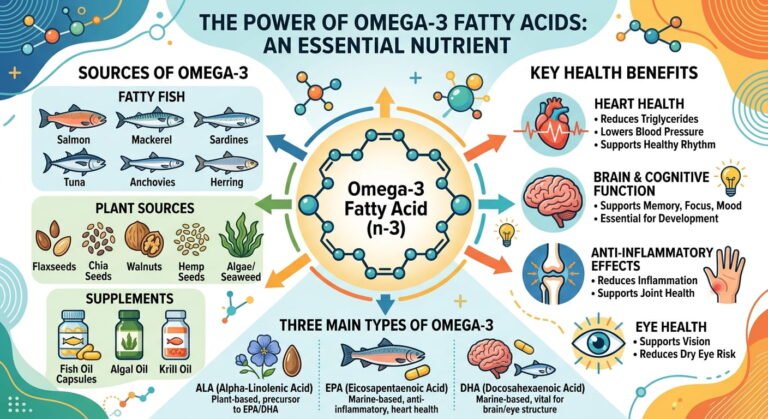
Sources of unsaturated fats include olive oil, nuts, seeds, avocados, and oily fish. Saturated fats occur in foods such as butter, fatty meats, and some tropical oils.
A healthy eating pattern generally emphasizes unsaturated fats and limits excessive saturated and trans fat intake. Total fat requirements vary, and extremely low-fat diets are not necessary for most people.
Vitamins and Minerals
Vitamins and minerals support many essential processes, including blood formation, immune function, bone health, and nerve activity.
A varied diet can provide nutrients such as iron, calcium, folate, potassium, vitamin B12, and vitamin C. Requirements differ by age and health status.
Supplements may be useful for particular deficiencies or life stages, but they should not automatically replace a balanced diet. Some supplements can interact with medicines or cause harm when taken in excessive amounts.
Fiber
Fiber is found in plant foods and supports digestion, bowel regularity, and other aspects of health. Some types of fiber can also help with cholesterol management and blood glucose regulation.
Good sources include beans, chickpeas, lentils, oats, pears, apples, vegetables, nuts, and whole grains.
Increase fiber intake gradually to reduce the likelihood of gas or bloating, particularly if your current diet contains little fiber.
Water
Water supports temperature regulation, circulation, digestion, and other essential functions. Fluid needs vary according to climate, activity, diet, pregnancy, and health conditions.
Drinking regularly throughout the day and responding to thirst are practical starting points for many healthy adults. People with heart or kidney conditions may need specific fluid guidance from their healthcare team.
Foods to Include More Often
A nutritious diet does not require expensive ingredients. Many affordable everyday foods provide excellent nutritional value.
Fruits and Vegetables
Fruits and vegetables provide vitamins, minerals, fiber, and a wide range of plant compounds. Fresh, frozen, and suitable canned options can all contribute to a healthy eating pattern.
Choose different colors and varieties when possible. Examples include carrots, spinach, tomatoes, oranges, bananas, apples, berries, and seasonal local produce.
It is generally preferable to juice because it contains more intact fiber and is often more filling.
Whole Grains
Whole grains retain more of their natural grain components than refined grains. Examples include oats, brown rice, whole-wheat bread, and whole-grain cereals.
In South Asian diets, whole-wheat roti can be part of a balanced meal. Portion size and the foods served alongside it also matter.
Beans and Lentils
Beans, chickpeas, and lentils provide fiber, plant protein, and minerals. They are often economical and can be used in soups, salads, curries, and other dishes.
Daal with vegetables and whole-wheat roti can be a practical, nutritious meal.
Fish, Eggs, and Lean Protein
Fish, eggs, poultry, beans, yogurt, tofu, and other protein sources can help meet daily protein needs.
Choose a variety over time. Preparation methods such as grilling, baking, steaming, or using moderate amounts of oil can help keep meals balanced.
Nuts and Seeds
Nuts and seeds contain unsaturated fats, protein, fiber, and various micronutrients. Examples include almonds, walnuts, peanuts, sesame seeds, and pumpkin seeds.
They are energy-dense, so moderate portions may be helpful for people who are monitoring their overall energy intake.
Milk, Yogurt, and Fortified Alternatives
Milk and yogurt provide protein and calcium, and some products provide vitamin D. Fortified soy beverages can offer similar nutrients when their labels indicate appropriate amounts.
Choose products that fit your nutritional needs and tolerance. Unsweetened options may help reduce added sugar intake.
Foods to Limit Without Creating Strict Rules
Healthy eating is about the overall pattern, not achieving perfection at every meal. Some foods can be enjoyed while being mindful of how frequently and in what quantities they are consumed.
Sugary Drinks
Soft drinks, sweetened juices, energy drinks, and heavily sweetened tea or coffee can contribute substantial amounts of added sugar.
Water, sparkling water, or unsweetened beverages are useful alternatives for everyday hydration. If you enjoy sweet drinks, gradually reducing their frequency or sweetness may be more manageable than changing everything at once.
Highly Processed Snack Foods
Some packaged snacks, biscuits, confectionery, and fast-food products contain high amounts of sodium, added sugar, or saturated fat.
These foods can fit occasionally into a varied diet. The goal is to avoid allowing them to routinely displace more nutrient-rich choices.
Excess Sodium
High sodium intake can contribute to raised blood pressure in some people. Processed meats, instant noodles, salty snacks, stock cubes, and some sauces can be important sources.
Try tasting food before adding salt and use herbs, spices, lemon, garlic, or other seasonings to build flavor.
Excessive Saturated Fat
Frequent high intake of saturated fat can raise LDL cholesterol in many people. Replacing some saturated fat with unsaturated fat is generally beneficial for cardiovascular health.
Practical changes may include using suitable vegetable oils in place of butter for some meals and choosing fish, legumes, or leaner protein options more often.
Alcohol
Alcohol is not required for good health. It can contribute energy and increase certain health risks, so avoiding it is a reasonable choice. People who do drink should consider relevant medical advice and local health guidance.
How to Build a Balanced Plate
A simple plate method can make meal planning easier without requiring calorie counting at every meal.
For many adults, a useful starting point is:
- Half the plate: Vegetables and fruit, with vegetables making up much of this portion.
- One-quarter: Protein foods such as fish, eggs, chicken, beans, or lentils.
- One-quarter: Grains or other starchy foods, preferably whole-grain options when practical.
- Alongside the meal: Water and an appropriate source of calcium, if needed.
This is a flexible guide rather than a strict prescription. People with specific medical needs, higher energy requirements, or different cultural eating patterns may need different proportions.
For example, a balanced lunch might include daal, whole-wheat roti, a serving of mixed vegetables, plain yogurt, and water. Another meal could combine rice, grilled fish, and cooked vegetables.
Practical Tips for Eating Well on a Budget
Nutritious eating can be affordable when meals are planned around available foods and seasonal ingredients.
Plan Meals Before Shopping
Make a short list of meals for the next several days. Check what you already have at home before buying more food.
Planning can reduce waste, unnecessary purchases, and reliance on expensive convenience meals.
Choose Seasonal Produce
Seasonal fruit and vegetables are often more affordable. Frozen produce can also be a practical option because it lasts longer and can reduce waste.
Use Beans and Lentils Regularly
Dried or canned legumes can provide protein and fiber at a relatively low cost. If using canned varieties, choose lower-sodium options when available or rinse them before use.
Cook Larger Portions
Preparing extra daal, beans, rice, or vegetables can save time on busy days. Store leftovers safely in suitable containers and refrigerate them promptly.
Compare Food Labels
Compare similar products for price, serving size, added sugars, sodium, fiber, and other nutrients relevant to your needs.
A more expensive product is not automatically healthier. Ordinary foods can provide excellent nutrition without special labels or marketing claims.
Healthy Eating Habits for Everyday Life
Long-term eating habits are usually easier to maintain when they fit naturally into daily routines.
Eat Regularly When It Suits Your Needs
Some people feel better with three main meals, while others prefer smaller meals or planned snacks. There is no single schedule that works for everyone.
Choose a pattern that supports energy, hunger, daily responsibilities, and any medical requirements.
Pay Attention to Hunger and Fullness
Eating slowly and noticing when you feel comfortably satisfied may help you recognize your body’s signals.
Avoid treating food as a moral issue. Eating more than planned on one occasion does not mean you have failed or need to compensate by skipping meals.
Prepare Simple Meals
You do not need complicated recipes to eat well. A meal containing vegetables, a protein source, and a grain or starchy food can be both practical and nourishing.
Keep convenient ingredients available, such as eggs, yogurt, oats, canned beans, frozen vegetables, and fruit.
Enjoy Food Without Guilt
Food has nutritional, cultural, social, and emotional roles. A flexible approach can make healthy eating more sustainable than strict rules that exclude entire food groups without a medical reason.
Combine Nutrition With Other Healthy Habits
Physical activity, adequate sleep, stress management, and routine medical care also contribute to overall health. No eating pattern can replace these other aspects of well-being.
Common Nutrition Myths
Myth 1: Carbohydrates Are Always Unhealthy
Carbohydrates are an important energy source. Whole grains, fruit, vegetables, and legumes provide useful nutrients and fiber. The type and amount of carbohydrate should reflect individual needs.
Myth 2: Skipping Meals Is Necessary for Weight Management
Skipping meals is not essential for managing weight. For some people, it can increase hunger or make balanced eating more difficult later. Individual preferences and medical needs matter.
Myth 3: Fresh Food Is Always Better Than Frozen Food
Frozen fruits and vegetables can retain valuable nutrients and may be convenient and economical. The nutritional value depends on the food and how it is processed, stored, and prepared.
Myth 4: Supplements Can Replace Healthy Meals
Supplements may help address specific nutrient gaps, but they do not provide the full combination of fiber, protein, and beneficial plant compounds found in a varied diet.
Myth 5: Healthy Eating Requires Expensive Products
Affordable foods such as lentils, beans, seasonal vegetables, oats, eggs, and whole grains can form the foundation of a nutritious diet.
Sample One-Day Balanced Eating Plan
This example illustrates how a day of eating might be organized. Portions should be adjusted according to appetite, activity, age, and individual health needs.
Breakfast: Oatmeal with milk or fortified soy beverage and a banana, or eggs with whole-wheat roti and tomatoes.
Morning snack: A piece of fruit or a small serving of unsalted nuts, if hungry.
Lunch: Daal or grilled chicken, whole-wheat roti or brown rice, mixed vegetables, and plain yogurt.
Afternoon snack: Plain yogurt, fruit, or roasted chickpeas.
Dinner: Fish, beans, tofu, or another protein source with vegetables and rice or whole-grain bread.
Drinks: Water throughout the day, with unsweetened tea or coffee if desired.
This plan is not a medical diet. People with diabetes, kidney disease, food allergies, pregnancy-related needs, or other medical conditions may require a more individualized approach.
When to Seek Professional Nutrition Advice
A registered dietitian or qualified healthcare professional can help tailor food choices to medical conditions, nutritional deficiencies, allergies, and personal goals.
Consider seeking advice if you experience persistent digestive symptoms, unexplained weight changes, ongoing fatigue, difficulty eating enough, or concerns about restrictive eating.
People with diabetes, kidney disease, heart disease, or conditions that affect nutrient absorption may benefit from individualized dietary guidance. Children, older adults, and people who are pregnant may also have specific nutritional requirements.
Avoid extreme diets, unverified detox products, and supplements that promise rapid results. If you take medication, check with a healthcare professional before starting supplements because some products can interact with treatment.
Conclusion
Eating well is about creating a balanced and flexible pattern that supplies the nutrients your body needs while fitting your everyday life. Fruits, vegetables, whole grains, protein-rich foods, healthy fats, and sufficient fluids can form the foundation of nutritious meals.
You do not need to change everything overnight or follow a perfect diet. Planning simple meals, choosing affordable ingredients, reading labels, and gradually improving everyday habits can make a meaningful difference over time.
The most useful eating plan is one that supports your health, respects your preferences, and remains realistic for the long term. If you have specific medical or nutritional needs, professional guidance can help you make choices that are safe and appropriate.
Frequently Asked Questions (FAQs)
1. What does it mean to eat well?
Eating well means consuming a variety of foods that provide adequate energy, protein, healthy fats, vitamins, minerals, and fiber. A balanced eating pattern also considers personal health needs and food preferences.
2. What foods should I eat every day?
Many people benefit from eating a variety of vegetables, fruit, whole grains, protein-rich foods, and suitable sources of healthy fats. Exact amounts depend on age, activity, and individual nutritional requirements.
3. Is healthy eating expensive?
Not necessarily. Lentils, beans, oats, eggs, seasonal produce, and whole grains can provide valuable nutrients at an affordable cost. Planning meals and using leftovers can also reduce expenses.
4. How much water should I drink daily?
Fluid needs vary with climate, activity, diet, and health. Drinking regularly and responding to thirst can be useful starting points for many adults, while certain medical conditions require individualized fluid advice.
5. Are carbohydrates part of a healthy diet?
Yes. Carbohydrates provide energy, and foods such as whole grains, fruit, vegetables, and legumes also provide fiber and other nutrients. The best choices and portions depend on individual needs.
6. Why is dietary fiber important?
Fiber supports bowel regularity and digestive health. Some types also help manage cholesterol and blood glucose. Beans, lentils, oats, vegetables, fruit, nuts, and whole grains are useful sources.
7. Do I need vitamin supplements if I eat well?
Not everyone needs supplements. They may be appropriate for specific deficiencies, life stages, or medical circumstances. A healthcare professional can help determine whether supplementation is necessary.
8. Can healthy eating improve energy levels?
A balanced diet can help meet energy and nutrient needs. However, persistent fatigue may also be related to poor sleep, stress, anemia, thyroid problems, or other conditions and should be assessed when necessary.
9. What is the easiest way to start eating healthier?
Begin with one or two manageable changes, such as adding vegetables to lunch, choosing whole grains more often, or replacing a sugary drink with water. Gradual improvements are often easier to maintain.
10. Can I enjoy treats and still eat healthfully?
Yes. A balanced eating pattern can include favorite foods and occasional treats. Overall habits, variety, and nutritional adequacy matter more than expecting every meal to be perfect.