Introduction
A goiter is an enlargement of the thyroid gland, a small, butterfly-shaped organ located at the front of the neck. The thyroid produces hormones that help regulate metabolism, body temperature, heart rate, energy use, and several other essential functions. When this gland becomes enlarged, a visible swelling may develop near the base of the neck.
Goiter can occur in people of different ages and may develop for several reasons, including iodine deficiency, autoimmune thyroid disorders, inflammation, or thyroid nodules. Although an enlarged thyroid is not automatically a sign of a serious illness, it deserves medical evaluation because the underlying cause determines whether treatment is necessary.
Some people with goiter have no noticeable symptoms apart from neck swelling. Others may experience difficulty swallowing, a feeling of pressure in the throat, voice changes, or symptoms associated with an underactive or overactive thyroid.
Understanding the possible causes, warning signs, diagnostic tests, and treatment options can help people recognize when to seek medical attention. With appropriate evaluation and care, many thyroid conditions can be managed effectively.
What Is a Goiter?
A goiter is a thyroid gland that has become larger than normal. The enlargement may affect the entire gland or appear as one or more lumps within it.
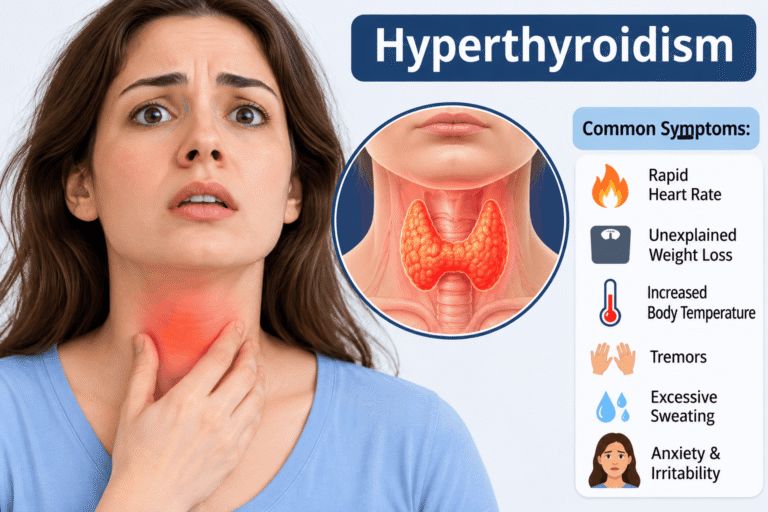
The thyroid sits below the Adam’s apple and wraps around the front of the windpipe. Despite its small size, it plays a major role in regulating the body’s metabolic activity through the production of thyroid hormones, mainly thyroxine (T4) and triiodothyronine (T3).
A goiter does not necessarily mean the thyroid is producing too much or too little hormone. Thyroid function can be:
- Normal: The gland is enlarged, but hormone levels remain within the expected range.
- Underactive: The thyroid produces insufficient hormones, a condition called hypothyroidism.
- Overactive: The thyroid produces excessive hormones, a condition called hyperthyroidism.
The distinction is important because treatment depends on both the cause of enlargement and how well the thyroid is functioning.
What Does a Goiter Look Like?
A goiter may appear as a swelling at the lower front of the neck. It can be small and barely noticeable or large enough to change the shape of the neck.
Some goiters develop evenly across the gland, while others contain distinct nodules. A person may notice swelling when looking in a mirror, fastening clothing around the neck, or swallowing.
Not every lump in the neck is a thyroid enlargement. Swollen lymph nodes, cysts, and other neck conditions can produce similar changes. A healthcare professional can determine whether the swelling originates from the thyroid.
Neck swelling should not be diagnosed through appearance alone. Medical assessment is particularly important if it grows quickly, feels hard or fixed, or is accompanied by persistent hoarseness or difficulty swallowing.
Types of Goiter
Goiters can be classified according to their structure, appearance, and underlying cause.
1. Diffuse Goiter
A diffuse goiter occurs when the entire thyroid gland becomes enlarged rather than developing one clearly defined lump.
It may occur with iodine deficiency, Graves’ disease, Hashimoto’s thyroiditis, or other conditions affecting thyroid activity.
2. Nodular Goiter
A nodular goiter contains one or more lumps, known as thyroid nodules.
A single nodule is called a solitary thyroid nodule, while several nodules may be described as a multinodular goiter. Most thyroid nodules are benign, but some require additional investigation to exclude cancer.
3. Simple Goiter
A simple goiter refers to thyroid enlargement that does not necessarily involve inflammation, cancer, or abnormal hormone production. It may occur when the thyroid adapts to changes in iodine availability or other influences on hormone production.
4. Toxic Goiter
A toxic goiter produces excessive thyroid hormones, leading to hyperthyroidism. It may occur in Graves’ disease or when one or more thyroid nodules produce hormones independently of normal regulation.
Symptoms can include a racing heartbeat, tremor, sweating, heat intolerance, and unintended weight loss.
5. Nontoxic Goiter
A nontoxic goiter is an enlarged thyroid that is not producing excessive hormone. Thyroid hormone levels may be normal or, depending on the underlying condition, low.
This category includes several forms of thyroid enlargement that require different approaches to monitoring and treatment.
Common Causes of Goiter
Several factors can lead to thyroid enlargement. Identifying the cause helps clinicians choose the most appropriate treatment.
1. Iodine Deficiency
Iodine is an essential nutrient used by the thyroid to produce hormones. When iodine intake is insufficient, the gland may enlarge as it attempts to maintain adequate hormone production.
Iodine deficiency has historically been an important cause of goiter worldwide. Its likelihood depends partly on local food sources and whether commonly used salt is adequately iodized.
People may obtain iodine from iodized salt, dairy products, seafood, eggs, and other foods, although amounts vary. Using iodized salt appropriately can help prevent deficiency in populations where it is recommended.
However, consuming large amounts of iodine or taking high-dose supplements without medical guidance can also disturb thyroid function.
2. Hashimoto’s Thyroiditis
Hashimoto’s thyroiditis is an autoimmune condition in which the immune system attacks thyroid tissue. Inflammation can cause the gland to enlarge, and thyroid hormone production may decline over time.
Possible symptoms of hypothyroidism include tiredness, constipation, dry skin, sensitivity to cold, and unexplained weight gain. Some people initially have few symptoms.
Blood tests and, when appropriate, thyroid antibodies and imaging can help establish the diagnosis.
3. Graves’ Disease
Graves’ disease is an autoimmune disorder that can cause the thyroid to become overactive. The entire gland may enlarge, producing a diffuse goiter.
Common symptoms include anxiety, tremors, a rapid heartbeat, sweating, heat intolerance, and weight loss despite a normal or increased appetite. Some people also develop eye symptoms, such as irritation or a bulging appearance.
Graves’ disease requires medical evaluation because untreated hyperthyroidism can affect the heart, bones, and overall health.
4. Thyroid Nodules
Thyroid nodules are growths within the thyroid gland. They may be solid, fluid-filled, or a combination of both.
Most are noncancerous, and many do not affect hormone levels. However, some nodules produce excess thyroid hormone, grow enough to cause pressure symptoms, or require testing to determine whether they contain cancerous cells.
Ultrasound is commonly used to evaluate their size and appearance.
5. Thyroid Inflammation
Thyroiditis refers to inflammation of the thyroid gland. Different forms may be associated with autoimmune disease, infections, medications, or the period following pregnancy.
Depending on the type, inflammation may cause neck discomfort, temporary hormone release, an underactive thyroid, or an enlarged gland.
6. Hormonal and Life-Stage Changes
Changes in thyroid hormone requirements can affect the gland during certain life stages. Pregnancy, for example, changes thyroid physiology and increases iodine requirements.
Pregnancy does not automatically cause goiter, but thyroid enlargement or abnormal thyroid function during pregnancy deserves appropriate assessment because thyroid hormones are important for maternal health and fetal development.
7. Certain Medications
Some medicines can influence thyroid function or contribute to enlargement in susceptible individuals. Examples include lithium and certain iodine-containing medications.
Never stop a prescribed medicine on your own because of a possible thyroid effect. Discuss concerns with the prescribing clinician, who can assess the risks and available alternatives.
8. Thyroid Cancer
Thyroid cancer can sometimes present as a thyroid nodule or an enlarged gland. However, most goiters and thyroid nodules are not cancerous.
A rapidly enlarging lump, persistent hoarseness, a hard neck mass, or enlarged neck lymph nodes should be assessed promptly. These findings do not prove cancer, but they may indicate the need for further investigation.
Symptoms of Goiter
Symptoms vary according to the size of the thyroid, the cause of enlargement, and whether hormone levels are abnormal.
Visible Neck Swelling
The most recognizable sign is swelling at the front of the neck. A small goiter may be detectable only during a physical examination, while a larger one can be visible without close inspection.
Difficulty Swallowing
An enlarged thyroid can press against the esophagus, the tube that carries food from the mouth to the stomach. This may create a sensation of food sticking or difficulty swallowing solid foods.
Breathing Difficulties
A large goiter may compress the windpipe and cause breathing discomfort, especially when lying down or turning the head.
New or severe breathing difficulty is a medical emergency and requires immediate attention.
Hoarseness or Voice Changes
Pressure on nearby structures or an underlying thyroid condition may affect the voice. Persistent hoarseness should be evaluated, particularly when accompanied by a growing neck lump.
Cough or Throat Pressure
Some people experience a persistent cough, throat tightness, or a feeling that something is pressing against the neck. These symptoms may occur even when the thyroid hormone levels are normal.
Symptoms of an Underactive Thyroid
If goiter is associated with hypothyroidism, symptoms may include:
- Fatigue or low energy
- Constipation
- Dry skin and hair changes
- Feeling unusually cold
- Slower heart rate
- Difficulty concentrating
- Unexplained weight gain
These symptoms are not specific to thyroid disease and should be interpreted alongside clinical assessment and blood tests.
Symptoms of an Overactive Thyroid
When the thyroid produces too much hormone, symptoms may include:
- Rapid or irregular heartbeat
- Trembling hands
- Increased sweating
- Heat intolerance
- Nervousness or irritability
- Frequent bowel movements
- Unintended weight loss
- Difficulty sleeping
Anyone experiencing a very rapid heartbeat, chest pain, fainting, or severe breathlessness should seek urgent medical care.
How Is Goiter Diagnosed?
A healthcare professional evaluates goiter by examining the neck, reviewing symptoms and medical history, and ordering tests when necessary.
1. Physical Examination
The clinician may inspect and gently feel the thyroid gland to assess its size, shape, tenderness, and texture.
They may also ask about swallowing problems, breathing symptoms, changes in body weight, family history, medication use, and possible iodine deficiency.
2. Thyroid-Stimulating Hormone Test
A thyroid-stimulating hormone (TSH) blood test is often an initial investigation. TSH is produced by the pituitary gland and helps regulate thyroid hormone production.
An abnormal result can suggest an underactive or overactive thyroid, although interpretation depends on the clinical context.
3. T4 and T3 Blood Tests
Free T4 and, in selected situations, T3 tests help determine whether thyroid hormone levels are low, normal, or high.
These tests can help distinguish a goiter with normal thyroid function from one associated with hypothyroidism or hyperthyroidism.
4. Thyroid Antibody Tests
If an autoimmune condition is suspected, blood tests for thyroid antibodies may be recommended. These can help support a diagnosis of Hashimoto’s thyroiditis or Graves’ disease.
5. Thyroid Ultrasound
Ultrasound uses sound waves to create images of the thyroid. It can show the gland’s size, identify nodules, and help determine whether a nodule has features that warrant additional testing.
It does not use ionizing radiation and is commonly used to investigate thyroid enlargement.
6. Fine-Needle Aspiration Biopsy
A fine-needle aspiration biopsy may be recommended when a thyroid nodule has concerning ultrasound features or meets relevant size criteria.
A thin needle collects a small sample of cells for examination. The procedure helps determine whether the nodule is benign, suspicious, or malignant, although results sometimes require further assessment.
7. Thyroid Scan
In selected cases, a nuclear medicine thyroid scan can show how actively different parts of the gland take up a tracer. It may help investigate certain forms of hyperthyroidism or functioning nodules.
The need for this test depends on the blood results and clinical circumstances. It is not appropriate for every patient, including during pregnancy.
Treatment Options for Goiter
Treatment depends on the cause, thyroid hormone levels, symptoms, gland size, and risk of complications. Some people require only periodic monitoring, while others need medication, radioactive iodine treatment, or surgery.
1. Monitoring
If the goiter is small, thyroid function is normal, and there are no concerning symptoms or structural features, a clinician may recommend observation.
Follow-up may include physical examinations, repeat thyroid blood tests, or ultrasound when appropriate.
Monitoring is not the same as ignoring the condition. New symptoms or changes in neck swelling should be reported.
2. Treating Iodine Deficiency
When iodine deficiency is confirmed or strongly suspected, improving iodine intake may help address the underlying cause.
The approach may involve appropriate use of iodized salt or clinician-recommended supplementation. Iodine supplements should not be taken indiscriminately because excessive intake can worsen some thyroid disorders.
3. Medication for Hypothyroidism
If the goiter is associated with hypothyroidism, levothyroxine may be prescribed to replace the thyroid hormone the body is not producing adequately.
The dose depends on factors such as age, body size, underlying health conditions, and laboratory results. Regular monitoring is necessary to avoid under-treatment or excessive hormone replacement.
Thyroid hormone medication is not routinely appropriate for every goiter, especially when thyroid function is normal.
4. Treatment for Hyperthyroidism
Hyperthyroidism may be treated with antithyroid medicines, radioactive iodine, surgery, or a combination of approaches, depending on the cause.
Beta-blockers may be prescribed to control symptoms such as tremor and a rapid heartbeat while the underlying condition is being treated. They do not directly correct excess thyroid hormone production.
Treatment for Graves’ disease may differ from treatment for a toxic multinodular goiter, so accurate diagnosis is important.
5. Radioactive Iodine Treatment
Radioactive iodine is taken up by thyroid tissue and can reduce hormone production and, in some cases, gland size.
It is used for selected thyroid conditions, particularly certain forms of hyperthyroidism. It is not suitable during pregnancy or breastfeeding, and patients need specific instructions about safety precautions.
Hypothyroidism may develop after treatment, requiring long-term hormone replacement.
6. Surgery
Thyroid surgery may be considered when a goiter causes significant pressure on the windpipe or esophagus, produces concerning cosmetic or structural problems, contains a suspicious or cancerous nodule, or is associated with hyperthyroidism that is best treated surgically.
Depending on the condition, a surgeon may remove part or all of the thyroid gland.
Potential risks include bleeding, injury to nerves that affect the voice, and changes in calcium regulation due to effects on the parathyroid glands. Some people need lifelong thyroid hormone replacement after surgery.
A specialist can explain the benefits, risks, and alternatives before a decision is made.
Can Goiter Be Prevented?
Not every goiter can be prevented. Autoimmune conditions, inherited factors, and some thyroid nodules may develop despite healthy habits. However, addressing avoidable nutritional deficiencies and managing thyroid conditions appropriately can reduce certain risks.
Use Iodized Salt Appropriately
In areas where iodine deficiency is a concern, iodized salt is an important prevention strategy. Use it according to local health guidance, while keeping total salt intake within recommended limits.
Do not increase salt consumption simply to obtain more iodine.
Eat a Varied Diet
A balanced diet can provide iodine and other nutrients required for normal health. Food sources may include dairy products, eggs, seafood, and appropriately fortified foods, depending on local availability.
People following restricted diets may need individualized advice about meeting iodine requirements.
Avoid Unnecessary Supplements
High-dose iodine, kelp, and seaweed supplements may contain substantial or unpredictable amounts of iodine. Excessive intake can disrupt thyroid function in some individuals.
Choose supplements only when there is a clear reason and appropriate guidance.
Attend Medical Follow-Ups
People with known thyroid disease should follow their clinician’s recommendations for blood tests, medication adjustments, and imaging. Appropriate monitoring can identify changes before complications become more significant.
Goiter and Diet: What Should You Know?
Diet can influence thyroid health, but no particular food can reliably eliminate every goiter. Treatment should target the underlying cause.
Foods That Provide Iodine
Iodine-containing foods include iodized salt, dairy products, eggs, and many types of seafood. The iodine content of food varies by region, production method, and preparation.
Most people do not need high-dose iodine supplements if they already receive adequate amounts through their diet.
Cruciferous Vegetables
Vegetables such as cabbage, broccoli, cauliflower, and kale contain natural compounds that can affect iodine use under certain circumstances, particularly with very high consumption and insufficient iodine intake.
For most people, eating normal portions of these vegetables as part of a varied diet is not a reason for concern. They provide fiber, vitamins, and other valuable nutrients.
Soy Foods
Soy foods may affect thyroid medication absorption when eaten close to the time of taking certain medicines, but they do not need to be universally avoided. People taking levothyroxine should follow their clinician’s instructions regarding timing, food, supplements, and consistency.
Supplements and Herbal Remedies
There is no reliable evidence that unproven herbal remedies or detox products can cure all types of goiter. Some products may contain excessive iodine or ingredients that interact with medication.
Discuss supplements with a healthcare professional, particularly if you have an existing thyroid condition.
Goiter During Pregnancy
Pregnancy changes the body’s hormonal requirements and increases the need for adequate iodine intake. Thyroid hormone is important for maternal health and fetal development, especially during early pregnancy.
An enlarged thyroid during pregnancy may be related to an existing thyroid condition, iodine deficiency, or another cause. Evaluation may include thyroid blood tests and other investigations selected for pregnancy.
Treatment decisions must account for both maternal and fetal safety. Some thyroid medications are preferred over others during particular stages of pregnancy, and radioactive iodine is contraindicated.
Pregnant individuals should not begin iodine or thyroid supplements without appropriate medical guidance, because both inadequate and excessive intake can be harmful.
Goiter in Children and Teenagers
Thyroid enlargement can also occur in children and adolescents. Possible causes include autoimmune thyroid disease, iodine deficiency, congenital thyroid conditions, and thyroid nodules.
Because thyroid hormones are important for growth and development, unexplained neck swelling in a child should be assessed by a healthcare professional.
Evaluation may include a physical examination, thyroid blood tests, and ultrasound. Treatment depends on the cause and may require input from a pediatric specialist.
Parents should avoid giving children adult thyroid supplements, high-dose iodine, or unverified remedies.
Possible Complications of Goiter
Many goiters remain stable and do not cause serious problems. However, complications can occur depending on the size, structure, and underlying disease.
Compression of Nearby Structures
A large thyroid may press against the windpipe or esophagus, causing breathing or swallowing difficulties. Significant compression may require urgent assessment and, in some cases, surgery.
Abnormal Thyroid Hormone Levels
Some goiters are associated with hypothyroidism or hyperthyroidism. If untreated, these conditions may affect the heart, bones, fertility, mood, and other aspects of health.
Thyroid Storm
Thyroid storm is a rare, life-threatening complication of severe uncontrolled hyperthyroidism. Warning signs can include high fever, a very rapid heartbeat, severe agitation or confusion, vomiting, and collapse.
This requires emergency treatment.
Malignancy
A small proportion of thyroid nodules or thyroid enlargements are cancerous. A goiter does not automatically indicate cancer, but suspicious features should be investigated according to medical guidance.
When Should You See a Doctor?
Arrange a medical assessment if you notice a new lump or swelling at the front of your neck, persistent throat pressure, unexplained changes in weight, or symptoms that may suggest abnormal thyroid function.
Prompt evaluation is especially important if swelling grows quickly, the voice becomes persistently hoarse, swallowing becomes difficult, or a neck lump feels hard or fixed.
Seek emergency medical care for severe or sudden breathing difficulty, inability to swallow saliva, or rapidly worsening neck swelling.
Early assessment can help identify the cause and determine whether observation, medication, further testing, or surgery is needed.
Conclusion
Goiter is an enlargement of the thyroid gland that can develop for several reasons, including iodine deficiency, autoimmune thyroid disease, inflammation, and thyroid nodules. Although many cases are not dangerous, the underlying cause and thyroid function need to be evaluated to determine the right approach.
Diagnosis may involve a neck examination, blood tests, ultrasound, and, when indicated, a biopsy or other specialized testing. Treatment ranges from monitoring and correcting a nutritional deficiency to medication, radioactive iodine, or surgery.
A balanced diet, appropriate iodine intake, and regular follow-up can support thyroid health, but supplements and home remedies should not replace medical assessment. If you notice unexplained neck swelling or symptoms of thyroid dysfunction, consult a healthcare professional for an accurate diagnosis and an individualized treatment plan.
Frequently Asked Questions
1. What is a goiter?
A goiter is an enlarged thyroid gland located at the front of the neck. It may occur with normal, low, or high thyroid hormone levels, depending on its cause.
2. What is the most common cause of goiter?
Iodine deficiency is an important cause worldwide. In other settings, autoimmune thyroid diseases, such as Hashimoto’s thyroiditis and Graves’ disease, and thyroid nodules are common causes.
3. Is a goiter dangerous?
Many goiters are benign and cause few problems. However, some can interfere with breathing or swallowing, affect thyroid hormone production, or require investigation for cancer.
4. Can a goiter disappear on its own?
Some forms may improve when the underlying cause is corrected, while others remain stable or continue to enlarge. Whether it resolves depends on the cause and should be assessed by a clinician.
5. Does a goiter always mean I have a thyroid problem?
A goiter indicates thyroid enlargement, but it does not automatically mean hormone levels are abnormal. Blood tests help determine whether the gland is functioning normally.
6. Which foods are good for thyroid health?
A varied diet can include iodized salt in appropriate amounts, eggs, dairy products, seafood, vegetables, fruits, whole grains, and other nutritious foods. Individual iodine needs vary, and excessive supplementation can be harmful.
7. Can iodine supplements cure goiter?
Iodine may help when enlargement is caused by iodine deficiency. It will not treat every type of goiter, and excessive iodine can worsen some thyroid conditions. Use supplements only with appropriate guidance.
8. How is goiter diagnosed?
Diagnosis may include a physical examination, TSH and thyroid hormone blood tests, thyroid ultrasound, and, when indicated, antibody testing, a thyroid scan, or fine-needle aspiration biopsy.
9. Does goiter require surgery?
Not always. Small goiters without concerning symptoms may only need monitoring. Surgery may be recommended for significant compression, suspicious or cancerous nodules, or selected cases of hyperthyroidism.
10. When should I seek medical help for goiter?
See a healthcare professional for new neck swelling, persistent hoarseness, difficulty swallowing, or symptoms of thyroid dysfunction. Severe breathing difficulty or rapidly worsening swelling requires emergency medical attention.